

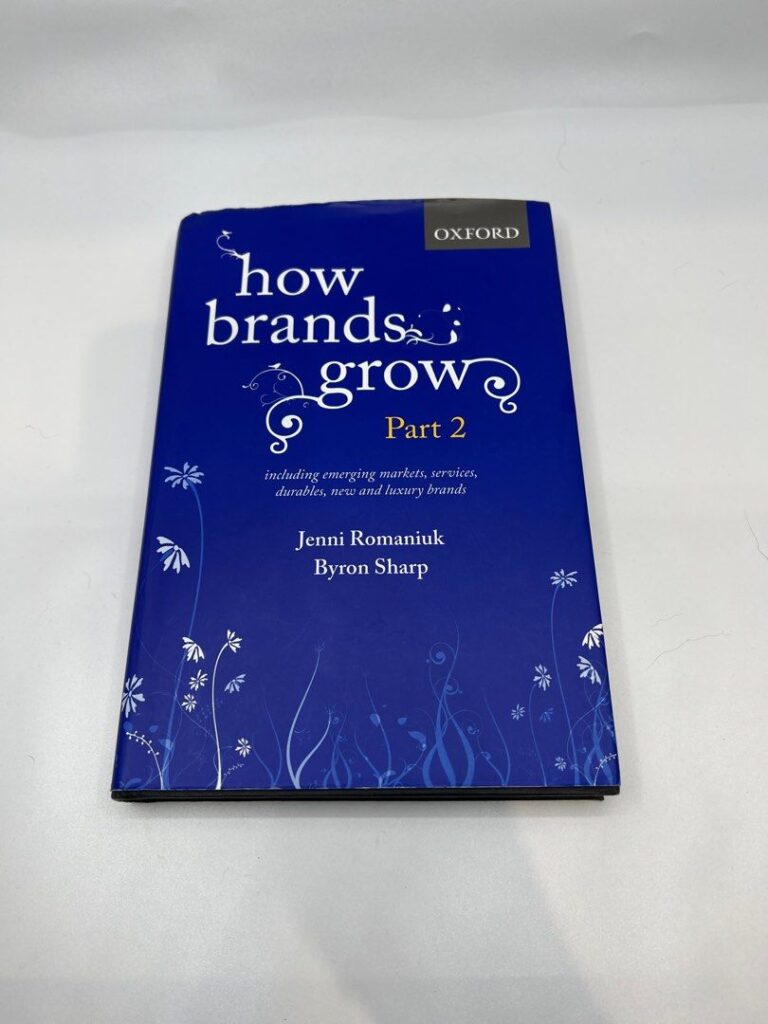
This book will change the way you think about marketing forever
Just Finished reading this piece. This is a wonderful read or ll the marketing enthusiasts.
How Brands Grow Part 2″ is an insightful addition to Byron Sharp’s first book: How brands grow. The book highlights several myths that we have about marketing.
I would like to thank the authors for making my job of teaching brand more difficult but correct. Thanks for answering some of questions which had always troubled me for long with evidences.
The book questions the sanctity of concepts like Targeting, Differentiation, Positioning, and loyalty, which have been held close to our hearts and adds a very interesting perspective to that.
The book is gaining tremendous mental availability but physical availability is missing in Nepal. I had to wait almost three months to get my hands on to this book. The book is little expensive for our region but worth every penny.
Management Colleges in Nepal should make these books available in libraries so that the teachers and the students can take advantage from the findings presented in the book.
Some key points addressed in the book:
- There are no strong or weak brands only big and small brands. Small brands are small because they have small market share and low loyalty. (Double Jeopardy law).
- A brand to grow has to build mental availability and Physical availability.
- Don’t underestimate the light and infrequent buyers. They are essential for growth. Heavy buyers are already buying hefty quantities and are few in numbers. It is difficult to grow focusing only on these buyers. Moreover, heavy buyers have propensity to reduce their consumption over time.
- Since they are less in number so WOM is also small.
- Competing brands sell to very similar buyers. Competition is largely about mental and physical availability.
- Mental Availability: How easily a brand comes to your mind in various buying situation in a week, month or year.
- Memory affects buying and buying affect memories. It is important for the brand to know the cues which helps retrieving the brand. We can call them Category Entry Points. It is important to understand why, when, where, with whom, with what etc. to understand the CEPs.
- A strong positioning means narrow CEP. A strong brand has more propositions and multiple CEPs.
- A big brand follows more sophisticated mass marketing rather than target marketing.
- Treat your brand elements like logo, character, colour, slogan, etc. as your asset. Answer to your fading differentiation can be your distinctive assets. (More on this when I read this book, ‘Distinctive Brand Assets’ it is still in transit)
- Media fragmentation makes it difficult to reach the customers. But that cannot be an excuse for not penetrating deeper in to the market. It must reach light and infrequent category buyers.
- Small brands suffer because even if they build mental availability their physical availability is restricted. Advertise where you sell.
- With in a short time frame reach more audience rather than reaching same audience again.
Physical availability means being easy to find and buy. Three prerequisites:
Presence: Is the brand present where buying happens?
Prominence: Is the brand easy to find?
Portfolio: Does the brand have buyable option?
New brands grow pretty much the same way as existing brands to reach new customers.
#marketing #branding #advertising #marketingmaestro #mentalavailability #physicalavailabilty

0 Comments